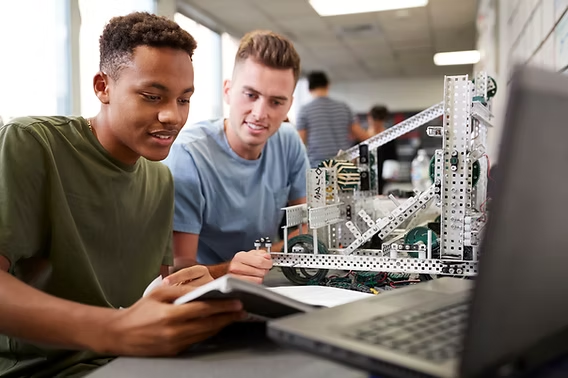
Engineering education shapes the minds that build our world—bridges, smartphones, renewable energy systems, you name it. But in a world that’s changing faster than a TikTok trend, why is innovation the secret sauce in engineering classrooms? Innovation isn’t just about flashy new gadgets; it’s about teaching future engineers to think creatively, solve real-world problems, and adapt to a future we can barely predict. This article dives deep into why fostering innovation in engineering education is critical, blending real-world examples, practical insights, and a sprinkle of humor to keep you hooked.
The Role of Innovation in Engineering Education
Innovation in engineering education means infusing creativity, problem-solving, and cutting-edge tools into the curriculum. It’s about moving beyond rote memorization of formulas to teaching students how to think like inventors. This shift prepares them to tackle complex, real-world challenges—like designing sustainable cities or creating AI that doesn’t go rogue.
Why Innovation Matters for Future Engineers
The world doesn’t stand still, and neither should engineering education. From self-driving cars to 3D-printed organs, the problems engineers face today require creative solutions that textbooks from the ‘90s can’t provide. Innovation ensures students are ready for a dynamic job market where adaptability is king. Think of it like upgrading your phone: sticking with an outdated model won’t cut it when the world’s running on 5G.
A Personal Story of Innovation’s Impact
When I was in college, my engineering professor challenged us to design a low-cost water filtration system for a rural community. We had no clue where to start—our textbook didn’t cover “DIY water purifiers.” But by experimenting with local materials and collaborating with classmates, we created a prototype that actually worked. That hands-on, innovative approach taught me more about engineering than any lecture ever could.
The Benefits of Innovative Engineering Education
Innovation in engineering education isn’t just a buzzword; it delivers tangible benefits that ripple through students’ careers and society. Let’s break down why it’s a game-changer.
Fostering Critical Thinking and Problem-Solving
Innovative teaching methods, like project-based learning (PBL), push students to think critically and solve problems creatively. Instead of memorizing equations, students tackle real-world scenarios, like designing earthquake-resistant buildings. This builds mental agility, preparing them for challenges no textbook can predict.
Preparing Students for Industry Demands
Industries crave engineers who can innovate on the fly. Companies like Tesla or SpaceX don’t hire people who only know theory—they want problem-solvers who can invent new solutions. Innovative education, incorporating tools like 3D printing or AI, ensures students are job-ready.
Enhancing Collaboration and Teamwork
Innovation often happens in teams. Engineering programs that emphasize collaborative projects—like building a solar-powered car—teach students how to work together, share ideas, and learn from failure. This mirrors the real world, where no engineer builds a skyscraper solo.
Table: Benefits of Innovation in Engineering Education
| Benefit | Description |
|---|---|
| Critical Thinking | Encourages students to analyze and solve complex problems creatively. |
| Industry Relevance | Aligns skills with modern industry needs, like AI and sustainable design. |
| Collaboration | Builds teamwork skills through group projects and interdisciplinary work. |
| Adaptability | Prepares students for rapidly changing technologies and global challenges. |
How Innovation Is Transforming Engineering Classrooms
Engineering education is evolving, and innovation is at the heart of this transformation. From cutting-edge tech to new teaching methods, here’s how classrooms are keeping up.
Integrating Emerging Technologies
Technologies like 3D printing, virtual reality (VR), and artificial intelligence (AI) are revolutionizing engineering education. For example, at Tecnologico de Monterrey, students use 3D printing in challenge-based learning (CBL) to create functional prototypes, boosting creativity and practical skills. VR lets students simulate engineering designs, like testing a bridge’s stability without building it.
Adopting Project-Based and Challenge-Based Learning
Project-based learning (PBL) and challenge-based learning (CBL) are shaking up traditional lectures. In PBL, students work on real-world projects, like designing eco-friendly packaging. CBL takes it further by tying projects to global issues, like climate change. Both methods teach students to innovate by doing, not just listening.
Encouraging Interdisciplinary Approaches
Innovation thrives at the intersection of disciplines. Engineering programs now blend fields like biology, computer science, and design. For instance, bioengineering students might collaborate with medical students to create prosthetics, fostering creative solutions through diverse perspectives.
Challenges of Implementing Innovation in Engineering Education
Innovation sounds great, but it’s not all smooth sailing. Let’s explore the hurdles and how to overcome them.
Resistance to Change in Traditional Systems
Some institutions cling to outdated curricula like a kid clutching a favorite toy. Faculty may resist new teaching methods, fearing they’re too risky or time-consuming. Overcoming this requires professional development and showcasing success stories, like MIT’s hands-on maker spaces.
Resource Constraints
Not every school has the budget for 3D printers or VR labs. Smaller institutions often struggle to fund innovative tools. Partnerships with industry or open-source platforms, like Arduino for electronics projects, can bridge this gap.
Balancing Theory and Practical Skills
Innovation shouldn’t replace core engineering principles. Striking a balance between theory (like thermodynamics) and practical skills (like coding a robot) is tricky but essential. A well-designed curriculum integrates both seamlessly.
Pros and Cons of Innovative Engineering Education
Pros:
- Prepares students for real-world challenges.
- Enhances creativity and critical thinking.
- Aligns with industry needs, improving job prospects.
- Encourages collaboration and interdisciplinary skills.
Cons:
- Requires significant investment in tools and training.
- May face resistance from traditional educators.
- Risk of overemphasizing tech at the expense of theory.
Real-World Examples of Innovation in Action
Nothing drives a point home like real stories. Here are two examples of how innovation in engineering education is making waves.
Case Study: Stanford’s Design Thinking Approach
Stanford University’s d.school uses design thinking to teach engineering students how to innovate. Students work on open-ended projects, like designing accessible playgrounds for kids with disabilities. This approach fosters empathy, creativity, and iterative problem-solving—skills every engineer needs.
Case Study: ETH Zurich’s Robotics Lab
At ETH Zurich, students in the robotics lab use AI and machine learning to build autonomous drones. By working on cutting-edge projects, they learn to innovate under real-world constraints, like battery life and safety regulations. Graduates from this program often land jobs at top tech firms.
People Also Ask (PAA) Section
Here are answers to common questions about innovation in engineering education, pulled from Google’s PAA feature.
Why is innovation important in engineering?
Innovation drives progress by enabling engineers to solve new problems, like climate change or medical advancements. It ensures education stays relevant, equipping students with skills to navigate a tech-driven world.
How can engineering education be more innovative?
Incorporate hands-on projects, emerging tech like AI, and interdisciplinary collaboration. Programs like PBL and partnerships with industry can spark creativity and practical learning.
What are the best tools for innovative engineering education?
Tools like 3D printers, VR/AR platforms, and coding environments (e.g., MATLAB, Python) enhance learning. Open-source platforms like Arduino are great for budget-conscious schools.
Where can institutions get resources for innovative education?
Universities can partner with tech companies, apply for grants, or use open-source tools. Online platforms like Coursera or edX offer courses to upskill faculty.
SEO Strategies to Amplify Innovation in Engineering Education
Want to spread the word about innovative engineering programs? A strong SEO strategy can boost visibility and attract students. Here’s how, tied to search intent.
Informational: Understanding Innovation’s Role
Create content answering “What is innovation in engineering education?” Use long-tail keywords like “benefits of innovative engineering education” and optimize for featured snippets with clear, concise definitions. For example, a blog post titled “How Innovation Shapes Future Engineers” could rank well.
Navigational: Finding Innovative Programs
Optimize for queries like “best innovative engineering schools.” Include structured data (e.g., EducationalOrganization schema) to highlight programs, faculty, and facilities. This helps search engines display rich snippets, like course details or event schedules.
Transactional: Tools and Resources
Target keywords like “best tools for engineering education innovation.” Recommend platforms like Tinkercad for 3D design or GitHub for coding projects. Include affiliate links to tools (AdSense-friendly) to monetize while providing value.
Comparison: Traditional vs. Innovative Education
| Aspect | Traditional Education | Innovative Education |
|---|---|---|
| Teaching Method | Lecture-based, theory-heavy | Hands-on, project-based |
| Technology Use | Limited to basic tools | Integrates AI, VR, 3D printing |
| Skill Focus | Memorization, core principles | Creativity, problem-solving, adaptability |
| Industry Alignment | Often outdated | Aligned with current industry needs |
FAQ Section
Q: How does innovation improve engineering education outcomes?
A: Innovation fosters critical thinking, hands-on skills, and adaptability, leading to better-prepared graduates. It aligns education with industry needs, boosting employability.
Q: What technologies are driving innovation in engineering education?
A: Technologies like 3D printing, AI, VR, and IoT are key. They enable practical, real-world learning through simulations and prototypes.
Q: How can small institutions adopt innovative methods?
A: Partner with industry, use open-source tools, and train faculty through online platforms. Small steps, like PBL, can make a big impact without breaking the bank.
Q: Why do some engineering programs resist innovation?
A: Resistance often stems from tradition, fear of change, or budget constraints. Faculty training and showcasing success stories can help overcome this.
Q: Where can students find innovative engineering programs?
A: Research schools like Stanford, MIT, or ETH Zurich. Online platforms like Coursera also offer innovative engineering courses.
Conclusion: The Future of Engineering Education
Innovation in engineering education isn’t a luxury—it’s a necessity. By embracing new technologies, teaching methods, and interdisciplinary approaches, universities can prepare students to solve tomorrow’s problems today. Whether it’s designing sustainable cities or coding the next big app, innovative engineers are the ones who’ll shape our future. So, let’s ditch the dusty textbooks, roll up our sleeves, and inspire the next generation to think big, fail often, and innovate relentlessly.
For more insights, check out Stanford’s d.school or explore Coursera’s engineering courses. Ready to innovate? The future’s waiting.