Imagine looking up at the night sky, stars twinkling peacefully, only to learn that a massive space rock could be hurtling toward Earth. It sounds like the plot of a Hollywood blockbuster, but for NASA, tracking potentially hazardous asteroids is a very real mission. These cosmic wanderers, remnants of the solar system’s formation, can pose serious risks if their orbits bring them too close to our planet. In this article, we’ll dive into the five most hazardous asteroids NASA is monitoring, explore why they’re a concern, and unpack what’s being done to keep Earth safe. Buckle up—this journey through the cosmos is both thrilling and a little humbling.
What Makes an Asteroid “Potentially Hazardous”?
NASA classifies an asteroid as a Potentially Hazardous Asteroid (PHA) if it’s larger than 140 meters (460 feet) and comes within 4.6 million miles (7.5 million kilometers) of Earth’s orbit. These space rocks aren’t guaranteed to hit us, but their size and proximity make them worth watching. Think of it like keeping an eye on a neighbor who occasionally drives a monster truck too close to your house—not an immediate threat, but you’d rather know where they’re headed.
Why Size and Distance Matter
An asteroid’s size determines its destructive potential. A rock the size of a football field could devastate a city, while a kilometer-wide behemoth might trigger global consequences. The distance criterion—4.6 million miles—sounds far, but in cosmic terms, it’s a near miss, roughly 19.5 times the distance to the Moon. NASA’s vigilance ensures we’re not caught off guard by these celestial close calls.
The Top 5 Hazardous Asteroids NASA Is Tracking
NASA’s Center for Near-Earth Object Studies (CNEOS) maintains a watchful eye on thousands of Near-Earth Objects (NEOs). Among them, five asteroids stand out due to their size, orbit, and potential impact risk. Let’s meet these cosmic heavyweights and explore why they’re on NASA’s radar.
1. Bennu: The Empire State Building of Asteroids
Discovered in 1999, Bennu is a 1,574-foot (480-meter) wide asteroid, roughly the size of the Empire State Building. It weighs a staggering 67 million tons and orbits close to Earth every six years. NASA’s OSIRIS-REx mission studied Bennu up close, revealing a 1 in 2,700 chance of impact in 2182, potentially releasing energy equivalent to 1.4 billion tons of TNT—enough to cause regional devastation.
2. 2023 TL4: A Civilization-Ending Threat?
Identified in 2023, this 47-million-ton asteroid has a 0.00055% chance (1 in 181,000) of striking Earth on October 10, 2119. If it did, the impact would unleash energy equivalent to 7.5 billion tons of TNT, dwarfing the largest nuclear explosions. Its massive size and uncertain orbit make it a top concern, though NASA continues to refine its trajectory data.
3. 2007 FT3: The Lost Asteroid
Last seen in 2007, this 54-million-ton asteroid has a slim 1 in 10 million chance of hitting Earth on March 3, 2030. Its “lost” status—meaning it hasn’t been observed recently—adds uncertainty, as astronomers can’t precisely track its path. While the odds are low, an impact could cause significant regional damage, making it a priority for rediscovery.
4. 2023 DW: A City-Killer in Waiting
Discovered in 2023, this 166-foot (50-meter) asteroid has a 1 in 34,500 chance of colliding with Earth on February 14, 2046. Though smaller than Bennu, its size is comparable to the asteroid that caused the 2013 Chelyabinsk explosion, which injured over 1,600 people. A similar impact could devastate a city, underscoring the need for constant monitoring.
5. Apophis: The Infamous Close Flyby
When Apophis was discovered in 2004, it was dubbed the “poster child for hazardous asteroids” due to early concerns about a 2029 impact. Now, NASA confirms it will safely pass Earth on April 13, 2029, at just 19,000 miles away—closer than some satellites. While no longer a threat for the next century, its 1,100-foot (335-meter) size keeps it on the watchlist.
Why These Asteroids Are a Concern
The idea of an asteroid wiping out civilization feels like science fiction, but history tells a different story. About 66 million years ago, the Chicxulub impactor, a city-sized asteroid, struck Earth, triggering the extinction of the dinosaurs. Today’s hazardous asteroids may not spell doom, but their potential for destruction is real. For instance, Bennu’s impact could plunge Earth into an “impact winter,” disrupting food supplies and ecosystems for years.
The Odds of an Impact
While the probabilities of these asteroids hitting Earth are low—ranging from 1 in 2,700 for Bennu to 1 in 10 million for 2007 FT3—they’re not zero. NASA’s simulations show that even small shifts in an asteroid’s orbit, caused by gravitational influences or solar radiation, could alter its path over decades or centuries. This uncertainty drives the need for precise tracking and early detection.
NASA’s Planetary Defense Strategies
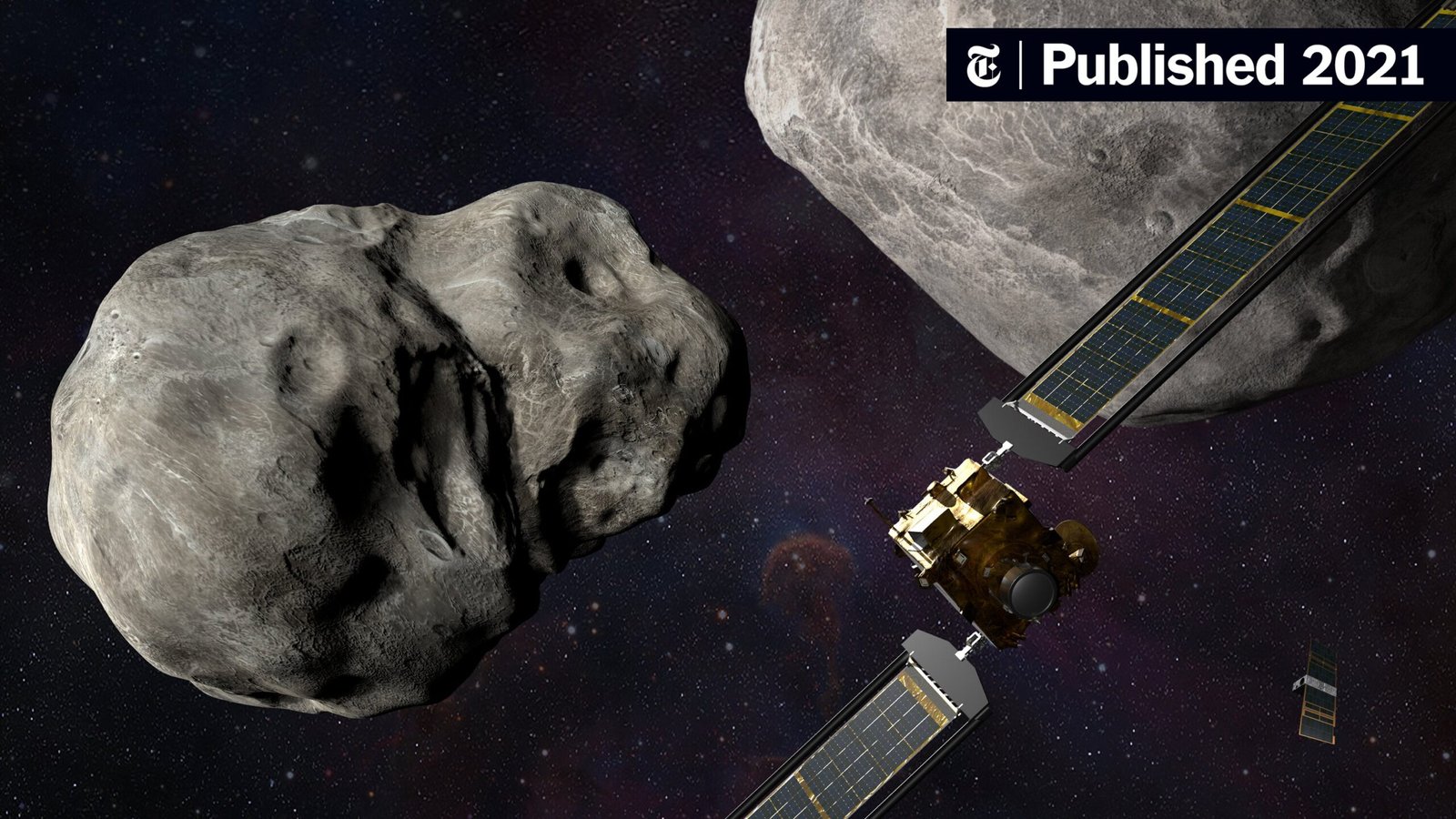
NASA doesn’t just watch asteroids—they’re actively working to protect Earth. The Planetary Defense Coordination Office, established in 2016, catalogs NEOs and develops deflection strategies. The 2022 DART mission, which successfully altered the orbit of the asteroid Dimorphos, proved that “kinetic impactors” can nudge a threatening asteroid off course if detected early.
The Role of NEO Surveyor
Set to launch in 2027, NASA’s NEO Surveyor mission will be the first spacecraft designed specifically to hunt for hazardous asteroids. By scanning the skies for objects that ground-based telescopes might miss, it aims to give us decades of warning time to prepare for potential threats. The mission’s open data practices will also allow global scientists to collaborate on planetary defense.
Comparing the Top 5 Hazardous Asteroids
To better understand these cosmic threats, here’s a comparison of their key characteristics:
| Asteroid | Size (Diameter) | Potential Impact Date | Impact Probability | Potential Damage |
|---|---|---|---|---|
| Bennu | 1,574 ft (480 m) | September 24, 2182 | 1 in 2,700 | Regional devastation, impact winter |
| 2023 TL4 | Unknown (massive) | October 10, 2119 | 1 in 181,000 | Civilization-ending explosion |
| 2007 FT3 | Unknown (massive) | March 3, 2030 | 1 in 10 million | Regional damage |
| 2023 DW | 166 ft (50 m) | February 14, 2046 | 1 in 34,500 | City-level destruction |
| Apophis | 1,100 ft (335 m) | April 13, 2029 (flyby) | No impact risk for 100 years | N/A (safe flyby) |
Pros and Cons of Current Asteroid Tracking
Pros:
- Advanced Technology: Ground-based telescopes and radar systems provide precise orbital data.
- Global Collaboration: NASA and ESA share data, enhancing detection capabilities.
- Deflection Success: The DART mission proves we can alter an asteroid’s path.
Cons:
- Lost Asteroids: Objects like 2007 FT3 are hard to track without recent observations.
- Long-Term Uncertainty: Orbital paths can shift over centuries, complicating predictions.
- Limited Detection: Many smaller asteroids remain undiscovered until they’re close to Earth.
A Personal Connection to the Cosmos
When I was a kid, I remember watching a meteor shower with my dad, lying on a blanket in our backyard. The streaks of light were magical, but he jokingly said, “Hope none of those decide to drop in for a visit!” That moment stuck with me, and years later, learning about NASA’s asteroid tracking efforts feels like a grown-up version of that childhood wonder. It’s reassuring to know that scientists are working tirelessly to ensure those “visits” never happen.
People Also Ask (PAA)
Here are answers to common questions about hazardous asteroids, pulled from Google’s PAA section:
What is a Potentially Hazardous Asteroid?
A PHA is an asteroid larger than 140 meters that comes within 4.6 million miles of Earth’s orbit. These objects are monitored closely due to their potential to cause significant damage if they collide with our planet.
How does NASA track asteroids?
NASA uses ground-based telescopes, radar systems, and space missions like OSIRIS-REx to monitor asteroid orbits. The upcoming NEO Surveyor mission will enhance detection by scanning for NEOs from space.
Can we stop an asteroid from hitting Earth?
Yes, NASA’s DART mission demonstrated that a kinetic impactor can alter an asteroid’s orbit. Other proposed methods include using lasers or nuclear devices to nudge asteroids off course, though these are still in development.
Where can I get real-time asteroid updates?
NASA’s Asteroid Watch Dashboard provides real-time data on upcoming asteroid flybys, including their size, distance, and closest approach dates. It’s a great resource for staying informed.
Tools for Staying Informed
For those eager to dive deeper, here are the best tools and resources for tracking asteroids and learning about planetary defense:
- NASA’s Asteroid Watch Dashboard: Real-time updates on NEO close approaches. Visit here.
- CNEOS Database: A comprehensive catalog of NEOs and their orbits. Explore here.
- SkyLive App: A mobile app for tracking asteroids and other celestial events, perfect for amateur astronomers.
- SpaceWeatherLive: Offers alerts on asteroid flybys and other space phenomena. Check it out.
These tools cater to both casual stargazers and serious space enthusiasts, making it easy to stay updated on potential cosmic threats.
FAQ: Common Questions About Hazardous Asteroids
1. How often do asteroids hit Earth?
Small meteors hit Earth daily, but most burn up in the atmosphere. Larger asteroids (over 140 meters) capable of significant damage strike roughly every 5,000 years, while civilization-ending impacts occur every few million years.
2. What would happen if Bennu hit Earth?
An impact from Bennu could release energy equivalent to 1.4 billion tons of TNT, causing regional devastation and potentially triggering an “impact winter” that disrupts global ecosystems and food supplies.
3. Are we prepared for an asteroid impact?
NASA’s DART mission and upcoming NEO Surveyor show progress in planetary defense, but challenges remain, like detecting smaller asteroids early. Continued research and international cooperation are key to preparedness.
4. Can I see Apophis during its 2029 flyby?
Apophis will be visible with binoculars or a small telescope during its April 13, 2029, flyby, especially in Europe, Africa, and parts of Asia. It’ll be a rare chance to witness a massive asteroid up close—safely, of course
The Road Ahead: Staying Vigilant
The thought of an asteroid striking Earth can feel overwhelming, but NASA’s efforts offer hope. From the DART mission’s success to the upcoming NEO Surveyor, we’re building a robust defense against cosmic threats. While the odds of a catastrophic impact are low, staying vigilant ensures we’re ready for whatever the universe throws our way. So, the next time you gaze at the stars, take comfort in knowing that scientists are watching the skies, keeping those monster trucks of the cosmos at a safe distance.